The Sheet Music Vault

Five Centuries
of Notation

In 1501, Ottaviano Petrucci pressed the first printed sheet music in Venice. In 1953, Bärenreiter published the Neue Bach-Ausgabe. In between, every great score and every editorial dynasty that defined how music is read.

Seventeen thousand six hundred and thirteen of those works live on this page.

17,613Total Works
1,194Composers
10,482Bärenreiter
9,444Breitkopf
fiveCenturies

We assembled this vault the way a conservatory assembles its library: edition by edition, against a known-good performance. Bärenreiter for the Bach. Henle for the Beethoven sonatas. The Breitkopf for the Romantic orchestral. The Wiener Urtext for Schubert and Brahms.

Every score sold here is the edition a working professional would put on the stand. No reduced-cost reprints. No unauthorised photocopies. The page you turn during a recital — that's the page we ship.

The pages that follow walk through the catalogue chronologically. From the Baroque masters who established the forms, through the Classical composers who perfected them, the Romantics who expanded them, and the modernists who reinvented them. Then the publishers who made all of it available — and the Urtext movement that gave us scholarly editions.

— A library, told as a story
I Chapter One · Origins · 1500 – 1600

The first printed sheet music left a Venetian press in 1501. Ottaviano Petrucci's Harmonice Musices Odhecaton — a hundred polyphonic chansons set in moveable type — was the moment notation moved from the scriptorium to the press, from the chapel to the household.

For the next century, polyphony was the dominant musical art. Palestrina in Rome, Lassus in Munich, Byrd and Tallis in London, Heinrich Schütz in Dresden — all wrote sacred and secular polyphony for choir, organ, and small instrumental ensembles. The forms that would dominate the Baroque — the cantata, the concerto grosso, the sonata da chiesa — did not yet exist. But the editorial tradition of publishing music had begun.

Schütz, born 1585, lived long enough to bridge the Renaissance and the early Baroque. His Geistliche Chormusik still appears in choir libraries today. Bärenreiter publishes 276 of his works.

~1532 – 1594

Lasso, Orlando di

Franco-Flemish, born in Mons. Composed over 2,000 works — the largest output of any Renaissance composer. Court Kapellmeister at the Bavarian court in Munich (1556 onwards). Wrote in every major Renaissance form: motets, masses, madrigals (Italian), chansons (French), Lieder (German). The Penitential Psalms (1565) are his masterpieces. Bärenreiter publishes the critical edition.

49 works · Bärenreiter Browse the catalogue →
II Chapter Two · The Baroque · 1600 – 1750

After Petrucci's first printed scores in Venice came two centuries of accumulating mastery. The figured bass became universal notation. The sonata da chiesa and the concerto grosso took their final forms. By the time Bach died in Leipzig in 1750, the keyboard suite, the cantata, the Passion, the concerto, and the unaccompanied solo had all reached forms that have not been surpassed.

1685 – 1750

Bach, Johann Sebastian

Court organist at Weimar, Kapellmeister at Köthen, cantor at the Thomaskirche in Leipzig from 1723 until his death in 1750. The Mass in B minor and the St Matthew Passion are his great sacred works. The Brandenburg Concertos and the cello suites are his secular masterpieces. The Well-Tempered Clavier is the foundational keyboard treatise of Western music. The Bach-Werke-Verzeichnis (BWV) catalogues 1,128 surviving works.

2,719 works · BWV catalogue · Bärenreiter NBA Urtext Browse the catalogue →

1685 – 1759

Handel, George Frideric

Born in Halle the same year as Bach, but their lives never crossed. Handel trained in Italy, then settled in London where he composed 42 operas in Italian for the English court. The shift from opera to oratorio in his later years gave us Messiah (1741), the work that has been performed continuously since. The Hallische Händel-Ausgabe (HHA) is the modern scholarly edition.

603 works · HWV catalogue · Bärenreiter HHA Browse the catalogue →

1681 – 1767

Telemann, Georg Philipp

Friend of both Bach and Handel, godfather to C.P.E. Bach, the most published composer of the Baroque era. From 1721 he directed music in Hamburg, simultaneously composing for five city churches and the city opera. Wrote over 3,000 works. The Tafelmusik (1733) is the showpiece — chamber music designed to accompany civic banquets. Bärenreiter publishes the Telemann-Werkausgabe.

436 works · TWV catalogue · Bärenreiter TWA Browse the catalogue →

1678 – 1741

Vivaldi, Antonio

Venetian priest known as "il prete rosso" (the red priest) for his hair colour. Music director at the Ospedale della Pietà, an orphanage for girls in Venice that supported a high-level all-female orchestra. Composed The Four Seasons (Le quattro stagioni), 500+ concertos for solo instruments and orchestra, the Gloria, and over 40 operas. Died penniless in Vienna; rediscovered in the 20th century.

278 works · RV catalogue · Ricordi performing editions Browse the catalogue →

1653 – 1713

Corelli, Arcangelo

Roman violinist who codified the concerto grosso form. The Op. 6 concerti (1714, posthumous) are the model that Vivaldi, Handel, and Bach all studied. The Op. 5 violin sonatas defined the violin sonata as a genre — and produced the most-published Baroque violin work, La Follia. Bärenreiter Urtext.

70 works · op. catalogue · Bärenreiter Browse the catalogue →

1637 – 1707

Buxtehude, Dietrich

North-German organist at the Marienkirche in Lübeck. The 20-year-old Bach walked 250 miles in 1705 to hear Buxtehude play. The Abendmusiken (evening concerts) at Lübeck were the model for what Bach would later organize at Leipzig. The organ works (chorale preludes, praeludia) and the cantatas. Bärenreiter and Breitkopf editions.

110 works · BuxWV catalogue · Bärenreiter & Breitkopf Browse the catalogue →

1683 – 1764

Rameau, Jean-Philippe

French composer-theorist who reformed both opera and music theory. The 1722 Traité de l'harmonie is the foundational text on functional tonality — chord roots, inversions, the concept of the "fundamental bass". The opera tragédies-lyriques (Hippolyte et Aricie, Castor et Pollux, Les Indes galantes) and the harpsichord works. Bärenreiter publishes the critical edition.

74 works · RCT catalogue · Bärenreiter Browse the catalogue →

1695 – 1764

Locatelli, Pietro

Italian violinist and composer who lived most of his life in Amsterdam. The Op. 3 L'arte del violino (1733) — twelve concertos with extraordinary virtuoso cadenzas anticipating Paganini by a century. The Op. 4 introduzioni teatrali, the Op. 6 violin sonatas. A central figure in 18th-century Amsterdam musical life.

66 works · op. catalogue · Bärenreiter Browse the catalogue →

1679 – 1745

Zelenka, Jan Dismas

Bohemian. Court composer at Dresden under Johann Sebastian Bach's contemporary Johann David Heinichen. Wrote sacred works of extraordinary contrapuntal complexity — the six trio sonatas for two oboes, bassoon and continuo are masterpieces. Eclipsed in his lifetime by his colleague Hasse, rediscovered in the 1950s. Bärenreiter publishes the critical edition.

71 works · ZWV catalogue · Bärenreiter Browse the catalogue →

1660 – 1722

Kuhnau, Johann

Cantor at the Thomaskirche in Leipzig (1701-1722) — the position J.S. Bach inherited at his death. Wrote the first published keyboard sonata in Germany — Frische Clavier-Früchte (1696). The Biblische Historien (1700) are six descriptive keyboard pieces depicting Old Testament scenes — early programme music. Bärenreiter publishes the editions.

96 works · Bärenreiter Browse the catalogue →
III Chapter Three · The Classical Maturity · 1750 – 1830

The Baroque polyphonic style gave way to the symphonic and sonata forms. Haydn invented what we now call the symphony. Mozart brought every form to perfection. Beethoven extended them and broke them. Schubert, dead at 31, gave the Lied its modern shape. The Köchel, Hoboken, and Deutsch catalogues number their lifetimes' work.

1732 – 1809

Haydn, Joseph

Court Kapellmeister to the Esterházy princes for nearly thirty years (1761-1790), then released to compose freely in Vienna and London. Defined the symphony as we know it (104 of them) and the string quartet (68). The Creation and The Seasons are the great oratorios of his old age. Mentor to the young Mozart. Teacher of Beethoven during 1792-1794. The Hoboken (Hob.) catalogue numbers his works in topic-then-chronological order.

693 works · Hob. catalogue · Bärenreiter & Henle Urtext Browse the catalogue →

1756 – 1791

Mozart, Wolfgang Amadeus

Salzburg-born, court composer to the Archbishop of Salzburg and then to Joseph II in Vienna. Performed across Europe as a child prodigy from age six. Wrote 41 symphonies, 27 piano concertos, the Requiem (left unfinished at death and completed by his student Süssmayr), the operas in Italian (Le nozze di Figaro, Don Giovanni) and German (Die Zauberflöte). Died at 35 of unknown illness during the composition of the Requiem. The Köchel (KV) catalogue is the standard reference.

2,525 works · KV catalogue · Bärenreiter NMA Urtext Browse the catalogue →

1770 – 1827

Beethoven, Ludwig van

Bonn-born, Vienna-based from late 1792. Bridged the Classical and Romantic eras. Nine symphonies (the Ninth introduced choral writing into a symphony for the first time), five piano concertos, the violin concerto, sixteen string quartets, thirty-two piano sonatas, ten violin sonatas, the Missa Solemnis, the opera Fidelio. Began losing his hearing at 28; the late string quartets and Diabelli Variations are entirely products of total deafness.

724 works · Op. & WoO · Henle & Bärenreiter Urtext Browse the catalogue →

1797 – 1828

Schubert, Franz

Lifelong Viennese, dead at 31. Wrote 998 catalogued works in 18 active years. Nine symphonies (the unfinished No. 8, the Great C major No. 9). The song cycles Die schöne Müllerin and Winterreise are the defining works of the German Lied. The string quintet in C, the late piano sonatas (D. 958-960), the Mass in E flat. The Deutsch (D.) catalogue places his works in chronological order.

565 works · D. catalogue · Bärenreiter NSA Urtext Browse the catalogue →

1714 – 1788

Bach, Carl Philipp Emanuel

Second surviving son of Johann Sebastian. The bridge between his father's high Baroque and the emerging Classical style. Court keyboardist to Frederick the Great in Berlin (1740-1768), then music director in Hamburg. The keyboard sonatas (the Prussian, Württemberg, "Hamburg" sets), the symphonies, the keyboard concertos. The 1753 Versuch über die wahre Art das Clavier zu spielen is the foundational treatise on keyboard performance.

84 works · Wq. catalogue · Bärenreiter Urtext Browse the catalogue →

1714 – 1787

Gluck, Christoph Willibald

German-born, Italian-trained, Vienna and Paris based. Reformed opera in the 1760s — eliminating the elaborate vocal display and stylistic conventions of the Italian opera seria in favour of dramatic clarity, simpler melody, and noble dignity. Orfeo ed Euridice (1762) and Alceste (1767) led the reform. Iphigénie en Aulide and Iphigénie en Tauride brought it to Paris. Bärenreiter publishes the critical edition.

70 works · WqV catalogue · Bärenreiter Browse the catalogue →

1735 – 1782

Bach, Johann Christian

Eleventh and youngest son of Johann Sebastian. Settled in London 1762 as music-master to Queen Charlotte. Befriended the eight-year-old Mozart during his 1764 London visit and remained an influence on Mozart's entire compositional life. Wrote opere serie, opere buffe, symphonies, keyboard concertos, the famous keyboard sonatas Op. 5 and Op. 17. The "London Bach". Bärenreiter critical edition in progress.

72 works · Warb. catalogue · Bärenreiter Browse the catalogue →

1745 – 1801

Stamitz, Carl

Bohemian-German. Son of Johann Stamitz (founder of the Mannheim school). The Mannheim style — the "rocket" theme, the Mannheim crescendo, the orchestral diminuendo — passed from Johann to Carl. The clarinet concertos became staples of the conservatory clarinet repertoire. The viola concertos. The numerous symphonies concertantes. A bridge from Pre-Classical to mature Classical style.

50 works · Bärenreiter Browse the catalogue →
IV Chapter Four · Romantic Expansion · 1820 – 1910

The orchestra grew. The piano grew. The opera house grew. Mendelssohn revived Bach. Wagner reinvented opera. Mahler stretched the symphony to ninety-minute architectures. Brahms held the line for the Classical proportions while making them sound new. Dvořák brought the Slavic voice to Vienna and New York. By 1910 the Romantic project was exhausted — the next generation would have to start again.

1809 – 1847

Mendelssohn Bartholdy, Felix

Born into wealth, the grandson of philosopher Moses Mendelssohn. Conducted the first performance of Bach's St Matthew Passion in over a century at age 20 (1829), single-handedly reviving the Bach revival that defines modern performance practice. Five symphonies (the Italian, the Scottish, the Reformation), the violin concerto, the octet for strings written at age 16, Elijah, the piano works (Songs Without Words). Died at 38.

613 works · op. catalogue · Bärenreiter Urtext Browse the catalogue →

1833 – 1897

Brahms, Johannes

Hamburg-born, Vienna-based. Friend and protégé of Robert and Clara Schumann (Clara remained a lifelong friend after Robert's death). Four symphonies. The piano concertos in D minor and B-flat. A German Requiem. The violin concerto in D and the double concerto for violin and cello. The chamber music with piano. The late piano works (Op. 117-119) — small, dense, unfailingly profound. Henle and Bärenreiter Urtext.

375 works · op. catalogue · Henle & Bärenreiter Urtext Browse the catalogue →

1810 – 1856

Schumann, Robert

Romantic to the core. Began as a piano virtuoso (a hand injury ended performance career), turned to composition. Four symphonies. The piano concerto in A minor. The cello concerto. Carnaval, Kreisleriana, the Davidsbündlertänze, the song cycles (Dichterliebe, Frauenliebe und Leben), the chamber music with piano. Died at 46 in a sanatorium following a suicide attempt. His widow Clara remained one of the great pianists of the century.

191 works · op. catalogue · Bärenreiter & Henle Browse the catalogue →

1813 – 1883

Wagner, Richard

Reinvented opera as music-drama. The Ring of the Nibelung — four operas spanning 15 hours of music, 26 years of composition (1848-1874). Tristan und Isolde reshaped the harmonic language of European music. Parsifal premiered the year before his death. Built his own opera house in Bayreuth specifically for his works. The Wagner-Werkverzeichnis (WWV) catalogues every composition.

95 works · WWV catalogue · Schott & Bärenreiter Browse the catalogue →

1860 – 1911

Mahler, Gustav

Music director of the Vienna State Opera (1897-1907), then conductor at the Met and the New York Philharmonic. Nine completed symphonies (the unfinished Tenth in widely-played performing versions). Das Lied von der Erde — symphony in everything but name, for tenor and contralto. The Knaben Wunderhorn songs and the Kindertotenlieder. Bridged late Romanticism into modernism.

57 works · Universal Edition critical editions Browse the catalogue →

1841 – 1904

Dvořák, Antonín

Bohemian innkeeper's son who became director of the National Conservatory of New York (1892-1895). The Symphony No. 9 "From the New World" was composed during the New York years and incorporates American folk-music influences. The cello concerto in B minor. The Slavonic Dances. Rusalka. The chamber music with the American Quartet and Piano Quintet. Bärenreiter Urtext.

297 works · B. catalogue · Bärenreiter Urtext Browse the catalogue →

1845 – 1924

Fauré, Gabriel

Director of the Paris Conservatoire from 1905. Teacher of Ravel, Boulanger, Schmitt, Enescu. The Requiem in D minor — small in scale and gentle in mood, a counterweight to the Verdi and Berlioz Requiems of the previous generation. The Pavane, the Ballade for piano and orchestra, the Dolly Suite, the lieder, the late chamber music. The reference for late French Romantic style.

80 works · op. catalogue Browse the catalogue →

1865 – 1957

Sibelius, Jean

National composer of Finland, who lived to 91 but composed nothing of importance after age 65 (the so-called silence of Järvenpää). Seven symphonies (the Sixth and Seventh particularly austere). The violin concerto in D minor — a staple of every conservatory audition. Finlandia, the Karelia Suite, the tone poems Tapiola and the Lemminkäinen Suite. Breitkopf publishes the conductor scores.

166 works · op. catalogue · Breitkopf Browse the catalogue →

1803 – 1869

Berlioz, Hector

French Romantic. Symphonie fantastique (1830) opened the door to programme music — a five-movement symphony with a printed narrative about a tortured love affair. La damnation de Faust, Roméo et Juliette, the Requiem, the operas Les Troyens and Béatrice et Bénédict. The Treatise on Instrumentation (1844) is still the foundational orchestration text.

96 works · op. catalogue · Bärenreiter & Breitkopf Browse the catalogue →

1811 – 1886

Liszt, Franz

Hungarian piano virtuoso who invented the recital (a soloist alone on stage with a piano, performing memorized works) and the symphonic poem (the Tasso, the Faust Symphony, Les préludes). The Transcendental Études, the Sonata in B minor, the Mephisto Waltz, the Années de pèlerinage. Took minor orders in 1865 and lived as Abbé Liszt for the rest of his life.

48 works · S. catalogue · Bärenreiter & Breitkopf Urtext Browse the catalogue →

1810 – 1849

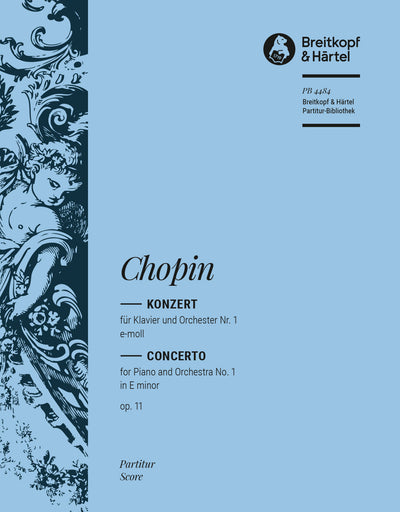
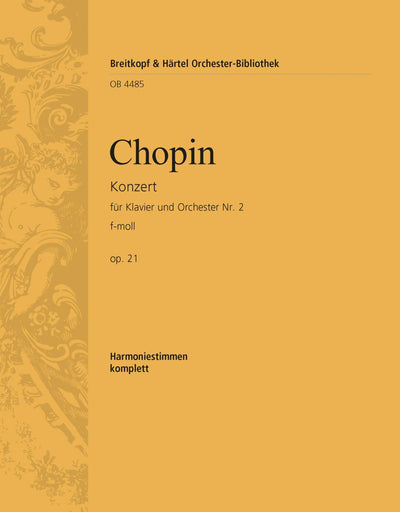
Chopin, Frédéric

Polish-French composer who wrote almost exclusively for solo piano. Two piano concertos. The 24 Préludes Op. 28. The 21 Nocturnes. The Études Op. 10 and Op. 25. The four Scherzi. The four Ballades. The B minor Sonata Op. 58. Died of tuberculosis at 39 in Paris. Henle Urtext.

21 works · op. catalogue · Henle & Bärenreiter Browse the catalogue →

1838 – 1875

Bizet, Georges

French. Carmen — premiered three months before his sudden death at 36, became one of the most-performed operas in history. The Symphony in C (composed at age 17, lost until 1933). L'Arlésienne incidental music. The Pearl Fishers (Les pêcheurs de perles). Bärenreiter publishes the critical Carmen edition.

22 works · WD catalogue · Bärenreiter Browse the catalogue →

1835 – 1921

Saint-Saëns, Camille

French. Five piano concertos. Three violin concertos. Two cello concertos. The Carnival of the Animals (which he forbade publication of during his lifetime, except for The Swan). The Symphony No. 3 with organ. The opera Samson et Dalila. Lived to 86 — bridged late Romantic into the era of Stravinsky. Durand publishes the standard editions.

68 works · op. catalogue · Durand & Bärenreiter Browse the catalogue →

1840 – 1893

Tchaikovsky, P.I.

Russian. Six numbered symphonies plus the Manfred Symphony. The first piano concerto in B-flat minor. The violin concerto in D. Eugene Onegin and The Queen of Spades. The ballets — Swan Lake, The Nutcracker, The Sleeping Beauty. The 1812 Overture. Bärenreiter Urtext.

86 works · op. catalogue · Bärenreiter Browse the catalogue →

1813 – 1901

Verdi, Giuseppe

Italian opera. Twenty-eight operas including Rigoletto, Il trovatore, La traviata, Aida, Otello, Falstaff. The Requiem, written in 1874 in memory of the novelist Manzoni — operatic in scale and theatrical in conception. The Quattro pezzi sacri of his old age. Ricordi publishes the standard editions; Bärenreiter publishes the critical edition of Rigoletto.

14 works · Bärenreiter & Ricordi Browse the catalogue →

1792 – 1868

Rossini, Gioachino

Italian. Wrote 39 operas in 19 years (1810-1829), then stopped composing operas at age 37. The Barber of Seville (1816), William Tell (1829), La Cenerentola, La gazza ladra. Spent the next four decades in Bologna and Paris writing chamber music, sacred works (Stabat Mater, Petite messe solennelle), and the "péchés de vieillesse" — late piano miniatures.

67 works · op. catalogue · Bärenreiter & Ricordi Browse the catalogue →

1786 – 1826

Weber, Carl Maria von

German Romantic. The opera Der Freischütz (1821) is the foundational work of German Romantic opera — supernatural plot, folk-song tunes, atmospheric orchestration. Also Euryanthe and Oberon. Two clarinet concertos, the clarinet quintet, the clarinet concertino — staples of the conservatory clarinet repertoire. Two piano concertos and the Konzertstück.

69 works · op. catalogue · Bärenreiter Urtext Browse the catalogue →

1843 – 1907

Grieg, Edvard

Norwegian. The Piano Concerto in A minor (1868). The Peer Gynt incidental music with Morning Mood, Anitra's Dance, In the Hall of the Mountain King. The Lyric Pieces (66 piano miniatures across 10 books). The Holberg Suite. Studied at the Leipzig Conservatory and remained close to the German Romantic style while incorporating Norwegian folk melody.

39 works · op. catalogue · Bärenreiter Urtext Browse the catalogue →
V Chapter Five · The Modern Break · 1890 – 1950

Debussy in Paris began making music that worked on different harmonic principles. Stravinsky in 1913 broke the audience at the Rite of Spring premiere. Bartók collected Hungarian and Romanian peasant songs and rebuilt them into chamber music. Sibelius wrote seven symphonies and then went silent for thirty years. Janáček found his voice at 50. Strauss bridged late Romantic into post-war modernism.

1875 – 1937

Ravel, Maurice

French Basque heritage, Paris-based. Daphnis et Chloé. Boléro. Two piano concertos (the D major for left hand alone, written for Paul Wittgenstein). Gaspard de la nuit. The string quartet in F. The song cycles. Master orchestrator who orchestrated Mussorgsky's Pictures at an Exhibition in 1922 (still the standard performing version). Durand publishes the performing editions; Bärenreiter critical edition in progress.

84 works · Durand & Bärenreiter Browse the catalogue →

1854 – 1928

Janáček, Leoš

Moravian. Came to international attention only after age 50. Sinfonietta (1926). Glagolitic Mass (1926). The operas — Jenůfa, Káťa Kabanová, The Cunning Little Vixen, The Makropulos Affair, From the House of the Dead. The two string quartets. The piano cycle On an Overgrown Path. Universal Edition publishes the critical editions.

101 works · Universal Edition Browse the catalogue →

1864 – 1949

Strauss, Richard

Survived from the late Romantic into the post-war era. The tone poems (Don Juan, Death and Transfiguration, Also sprach Zarathustra, Ein Heldenleben) of his early years. The operas Salome, Elektra, Der Rosenkavalier, Die Frau ohne Schatten, Capriccio. The Four Last Songs (1948), composed when he was 84. Breitkopf publishes the Richard Strauss critical edition.

27 works in Strauss collection · Breitkopf Browse the catalogue →

1881 – 1945

Bartók, Béla

Hungarian composer-ethnomusicologist who collected Hungarian and Romanian peasant songs on early phonograph recordings between 1906 and 1918, then rebuilt that material into modernist concert music. Six string quartets. Music for Strings, Percussion and Celesta. The Concerto for Orchestra (1943, written in poverty in New York exile). The Mikrokosmos for piano. Bärenreiter Urtext.

25 works · Sz. catalogue · Bärenreiter Browse the catalogue →

1862 – 1918

Debussy, Claude

Paris-born. Broke with the German Romantic harmonic language. Prélude à l'après-midi d'un faune (1894). La mer (1905). The 24 Préludes for piano (Books I and II). Pelléas et Mélisande (the only opera). The string quartet in G minor. The cello and violin sonatas of his last years.

57 works · L. catalogue · Durand Browse the catalogue →

1824 – 1884

Smetana, Bedřich

Czech composer who, alongside Dvořák, defined the Czech national music. Má vlast (My Fatherland, 1874-1879) — six symphonic poems including the famous Vltava (The Moldau). The opera The Bartered Bride. The string quartets, including the autobiographical From My Life. Deafness from age 50 echoed Beethoven's.

67 works · Bärenreiter Urtext Browse the catalogue →

1908 – 1942

Distler, Hugo

German composer of sacred choral music. Studied at the Leipzig Hochschule, appointed conductor of the State and Cathedral Choir of Berlin (Staats- und Domchor) in 1942. Composed the Mörike-Chorliederbuch, the choral concertos, the organ partitas. Conscripted into the Wehrmacht in 1942 and took his own life rather than serve. Bärenreiter publishes 150 of his works — the principal source for 20th-century German liturgical music.

150 works · Bärenreiter Urtext Browse the catalogue →

1890 – 1959

Martinů, Bohuslav

Czech composer who lived in Paris from 1923, then in the United States after fleeing Nazi-occupied France in 1941. Six symphonies. Concerti for almost every instrument. The chamber works, the operas (Juliette, The Greek Passion). 400+ surviving works. Bärenreiter publishes the Martinů critical edition.

81 works · H. catalogue · Bärenreiter Browse the catalogue →

1873 – 1916

Reger, Max

German. Composed in nearly every form except opera. The organ works (chorale fantasies, the B-A-C-H Fugue) are core conservatory repertoire. The Variations and Fugue on a Theme of Mozart, the orchestral works, the chamber music with clarinet. Bärenreiter publishes the Reger critical edition.

89 works · op. catalogue · Bärenreiter Browse the catalogue →

1935 –

Lachenmann, Helmut

German. Pupil of Luigi Nono. Coined the term "musique concrète instrumentale" — extended-technique playing that produces noises and unconventional sounds from traditional instruments. Pression for cello (1969), Gran Torso for string quartet, the opera Das Mädchen mit den Schwefelhölzern. One of the most important living European composers. Breitkopf publishes the critical editions.

50 works · Breitkopf Browse the catalogue →

20th-Century German Liturgical Music

The Choralists

Distler's death in 1942 didn't end the German liturgical movement — Pepping, Reda, Bialas, Schroeder and Marx carried it through the post-war decades, refining the choral idiom for Lutheran cathedrals and Catholic basilicas across Germany.

VI Chapter Six · The Publishers · 1719 → today

Composers wrote the music. Publishers carried it forward. Without the editorial dynasties that prepared, corrected, and reprinted the scores across centuries, none of those compositions would exist on your stand today. Two houses dominate the catalogue you read — both still active, in the same cities where they were founded.

Since 1719 · Leipzig

Breitkopf & Härtel

Bernhard Christoph Breitkopf founded the firm in 1719. His son invented the moveable music type that allowed mass-produced printed scores. Mozart's correspondence mentions "the Breitkopf catalogue" — by then a 200-page reference of all music available in Europe. Breitkopf published the first edition of Beethoven's Complete Works (1862-1888), and was the original publisher of Mozart, Haydn, Schubert, and Mendelssohn. Three centuries of continuous music publishing under the same name in the same city.

9,444 editions across 305 years Browse the catalogue →

Since 1923 · Kassel

Bärenreiter

Karl Vötterle founded Bärenreiter in 1923 in Augsburg. After moving to Kassel in 1927 and surviving the war, the house emerged in the 1950s as the principal publisher of the modern critical edition. The Neue Bach-Ausgabe (NBA, 1954-2010) is the largest critical edition project in music history — 100+ volumes of scores plus critical commentary across more than 50 years. The Neue Mozart-Ausgabe and the Schubert NSA followed the same scholarly model. Today conductors of the Berlin and Vienna Philharmonics work from Bärenreiter scores; conservatory professors at the Hochschule, the Mozarteum, and the Sibelius Academy assign Bärenreiter Urtext.

10,482 editions · the modern Urtext standard Browse the catalogue →

The Urtext Movement

How the Modern Critical Edition Came to Be

For most of the 19th century, performers played from editions that overlaid the composer's text with editorial fingering, dynamics, and "improvements" — Hans von Bülow's edits to Beethoven, Carl Czerny's edits to Bach, generations of well-meaning but heavy-handed performer-editors.

The reaction began in the late 19th century with the Bach-Gesellschaft complete edition. The 1954 Bärenreiter Neue Bach-Ausgabe (NBA) went further — comparing every surviving manuscript and early printing, distinguishing what Bach wrote from what later editors added. The Mozart NMA (1955-2007) and the Schubert NSA followed the same scholarly model.

Henle began publishing Urtext editions in 1948 as a commercial alternative — affordable, beautifully engraved, conservatory-grade scholarship without the apparatus of the complete-works edition. Today the Bärenreiter NBA, Henle Urtext, Wiener Urtext, and Breitkopf Urtext together represent the standard for serious performance.

When you order a Bach Cello Suite or a Beethoven sonata from us, this is the inheritance you receive — a text reconstructed from manuscript sources, presented without editorial overlay, published with editorial commentary and source descriptions.

VII Chapter Seven · By Form

Once you know the composers and the houses, you can choose by form. The symphony grew from Haydn's 104 to Mahler's hour-long architectures. The concerto evolved from Vivaldi's three-movement template into the Brahms double concerto. The opera went from Monteverdi's Orfeo to Wagner's Ring. The sonata, the quartet, the song cycle — every chapter's composers wrote in these forms; the forms outlast the chapters.

VIII Chapter Eight · By Instrument

Or you can find the catalogue through your own instrument. Each one has its own canonical repertoire — the Bach Cello Suites for cello, the Bach Sonatas and Partitas for violin, the Beethoven Sonatas for piano, the Mozart concerti for clarinet and horn. The conservatory builds a curriculum around these.

IX Chapter Nine · Practical Services

A library is only useful if you can find what you need. Beyond the carousels and indexes above, here is what we do for working musicians, conservatory students, conductors, and music librarians.

The Standard

Urtext

German for "original text". A scholarly reconstruction of the composer's autograph manuscript and earliest authoritative printings. No editorial fingering, dynamics, or articulation added — only what the composer wrote. Bärenreiter, Henle, Wiener Urtext.

For the Player

Performance

Editions designed for actual rehearsal — fingering, bowing, articulation suggestions added by named performer-editors. Most useful when learning a piece. Schirmer, Galaxy, Edition Peters.

For the Researcher

Scholarly

Critical editions reproducing every variant reading. Includes facsimile excerpts, source descriptions, hundreds of pages of editorial commentary. The editions cited in dissertations. NBA Bach, NMA Mozart, NSA Schubert.

The Audition Library

Standard repertoire for entrance exams at Curtis, Juilliard, NEC, RAM, RCM, Berlin Hochschule, Mozarteum, Sibelius Academy. Bärenreiter Urtext and Henle as the default editions.

XI Chapter Eleven · For Educators

Conservatory teachers, school directors, private studios. Method books for first lessons through pre-conservatory. Anthologies that compress a repertoire era into a single volume. Études that build technique across years of work. Below — the educational backbone of the Vault.

Educator volume orders

For school music programmes, method-book class orders, anthology selections for choir or band: email us with your roster size and grade level for direct-from-publisher pricing on Bärenreiter, Breitkopf, and Henle volume orders over $300.

XII Chapter Twelve · For Soloists & Auditioners

The conservatory audition. The orchestra audition. The competition. The recital. Each demands a specific repertoire, in a specific edition. Below — the editions you should arrive with on the first day, and the standard works the audition committee expects.

"The audition list arrives, and the candidate has six weeks. Whatever else they do, they must arrive with the correct edition. We can't fix the playing. We can fix the score."

— Conservatory audition coach, Vienna

XIII Chapter Thirteen · For Choirs

From cathedral choirs to school glees. From Palestrina motets to Britten anthems. From Bach's Mass in B minor to contemporary commissioned works. Below — the Vault's choral library, organised by purpose.

Sacred Choral · 1,560 Works · The Largest Single Collection

All sacred

Bach Passions and Cantatas. Mozart Requiem and the C-minor Mass. Brahms Requiem. Schubert Mass in E flat. Verdi Requiem. The Bruckner motets. The Britten anthems. The complete sacred-choral repertoire of the Western tradition.

"For a programme of mass and motets, the choirmaster wants Bärenreiter for the Bach and Schütz, Carus for the Brahms and Mendelssohn motets, and Faber or OUP for the British anthem repertoire. We carry all three."

— Cathedral choirmaster, England

XIV Chapter Fourteen · The Bärenreiter Tree · 41 Sub-collections

The complete Bärenreiter catalogue runs to 10,482 editions across 40 sub-collections. Below — every category, alphabetical, with current product counts. From the flagship Urtext line (4,844 editions) and Performance Parts (3,403) through specialised categories like Facsimiles, Libretti, and Critical Commentary.

BÄRENREITER A-C

BÄRENREITER C-P

BÄRENREITER P-S

XV Chapter Fifteen · The Breitkopf Lineage · 16 Sub-collections

The world's oldest music publisher. Bärenreiter rebuilt the modern critical edition; Breitkopf has been at it since 1719. The Breitkopf catalogue is dominated by the Romantic and post-Romantic orchestral repertoire — Beethoven, Brahms, Schumann, Mendelssohn, Bruckner, Mahler, Sibelius, Strauss. 9,444 editions across 305 years, alphabetical below.

BREITKOPF & HÄRTEL

XVI Chapter Sixteen · The Other Publishers

Bärenreiter and Breitkopf are not the only voices on the catalogue. American chamber-music specialist Lauren Keiser. The 1894-founded Edward B. Marks Music Company. Second Floor Music — the Joe Henderson and Steve Lacy jazz publisher. Below, the smaller editorial houses that round out the Vault.

Plus the 17,613-work master catalogue and the curated category collections shown in earlier chapters — every score we stock, organised by every dimension we know to organise by.

XVII Chapter Seventeen · The Complete Composer Index · 215 Composers

Earlier chapters profile the great composers individually — bio, dates, catalogue, carousel. Below: the complete index. Every composer in the catalogue with ten or more works available, organised alphabetically. From Albinoni to Zimmermann, 215 composers in five alphabetical groups.

COMPOSERS A-C · 41

COMPOSERS D-G · 32

COMPOSERS H-L · 45

COMPOSERS M-R · 41

COMPOSERS S-Z · 56

Saint-SaënsCamille · 68 works SandréGustave · 12 works SaßmannshausEgon / Sassmanns… · 28 works ScarlattiAlessandro · 10 works ScartazziniAndrea Lorenzo · 12 works ScheidtSamuel · 34 works ScheinJohann Hermann · 44 works SchickhardtJohann Christian · 25 works SchleeThomas Daniel · 29 works SchneiderFrancis · 12 works SchneiderFriedrich · 11 works SchoeckOthmar · 25 works SchroederHermann · 64 works SchubertFranz · 565 works SchulzeJan Philip (KA) · 11 works SchumannClara · 14 works SchumannRobert · 191 works SchutzHeinrich · 276 works SchwarzGerhard · 16 works Schwarz-SchillingReinhard · 20 works SchütterMeinrad · 10 works SeckingerKonrad · 34 works SeitherCharlotte · 40 works SibeliusJean · 166 works SingerOtto (KA) · 10 works SmetanaBedrich · 67 works SommerfeldJörg · 29 works SpohrLouis · 35 works StamitzAnton · 12 works StamitzCarl · 50 works StranzUlrich · 27 works StraussJohann · 78 works StraussRichard · 27 works SukJosef · 36 works SweelinckJan Pieterszoon · 14 works SzathmáryZsigmond · 12 works Sánchez-VerdúJosé Maria · 23 works TelemannGeorg Philipp · 436 works ThieleSiegfried · 12 works TrojahnManfred · 64 works TschaikowskyPjotr Iljitsch · 86 works TubaEuphonium, Sousa… · 19 works VanhalJohann Baptist · 23 works VerdiGiuseppe · 14 works VierneLouis · 18 works VivaldiAntonio · 278 works WagnerRichard · 95 works WeberCarl Maria von · 69 works WimbergerGerhard · 17 works ZelenkaJan Dismas · 71 works ZenderHans · 19 works ZiegenrückerWieland · 10 works ZilligWinfried · 11 works ZimmermannHeinz Werner · 51 works ZippFriedrich · 27 works ŠevcíkOtakar · 19 works
XVIII Chapter Eighteen · By Tradition

Music has always travelled — German composers wrote Italian operas, French composers studied with German masters, Russian composers borrowed from Italian opera. But the editorial tradition still organises by national school. Below — the canon by country of origin, with the major figures grouped under each tradition.

German · 24 composers

Austrian · 7 composers

French · 7 composers

Italian · 6 composers

Czech & Slavic · 5 composers

Hungarian · 2 composers

Russian · 1 composers

British · 1 composers

Polish · 1 composers

Norwegian · 1 composers

Finnish · 1 composers

Franco-Flemish · 1 composers

XIX Chapter Nineteen · The Historic Editions

The famous critical-edition projects of the last 150 years. Each one attempted to publish a composer's complete works against scholarly standards — an editorial achievement on the scale of decades. Below, the editions you see cited in dissertations, performance notes, and concert programmes worldwide.

1851 – 1900

Bach-Gesellschaft

Wilhelm Rust's 46-volume complete Bach edition — the first attempt to publish all of Bach's surviving works. Now superseded by the NBA, but historically the ground that Bach scholarship was built on.

Now: Bärenreiter NBA

1862 – 1888

Beethoven Sämtliche Werke

Breitkopf's first complete-works edition of Beethoven, published 25 years after his death. Edited by a committee of leading Leipzig musicologists. Replaced by Henle Urtext for performance and the modern Beethoven-Werkverzeichnis for scholarship.

Now: Henle · Breitkopf · Bärenreiter Beethoven 2027

1954 – 2010

NBA · Neue Bach-Ausgabe

Bärenreiter's 100+ volume critical Bach edition. 56 years of editorial work spanning two generations. Each volume includes critical commentary, source descriptions, and the manuscripts cited. The current scholarly standard for Bach performance.

10,482 Bärenreiter editions

1955 – 2007

NMA · Neue Mozart-Ausgabe

Bärenreiter's critical Mozart edition. 52 years to complete. Used by the Vienna and Berlin Philharmonics, Mozarteum students, and every major Mozart recording project. Replaces the 19th-century Köchel-Schmid edition for serious performance.

2,525 Mozart works

1964 – ongoing

NSA · Neue Schubert-Ausgabe

The Schubert critical edition, ongoing for six decades — the lieder cycles, the late piano sonatas, the Mass in E flat and the Great C major Symphony all appear here. The Bärenreiter edition every Lieder singer reaches for.

565 Schubert works

1948 – ongoing

Henle Urtext

The Munich-based Urtext line started by G. Henle in 1948. Beautifully engraved, conservatory-priced, no apparatus. The default Beethoven sonata edition in piano studios from Curtis to Mozarteum. The competitor and complement to Bärenreiter Urtext.

G. Henle Verlag · Munich

1953 – ongoing

HHA · Hallische Händel-Ausgabe

The complete Handel critical edition, named for his birthplace in Halle. The opera scores, the oratorios, the orchestral works, the keyboard suites. Bärenreiter publishes the performing editions; the HHA volumes are the scholarly source.

603 Handel works

1960 – ongoing

TWA · Telemann-Werkausgabe

The complete Telemann edition. Volumes appearing slowly across decades — Telemann's 3,000+ works will take a long time to publish. Bärenreiter publishes the chamber concerti, the cantata cycles, the Tafelmusik in scholarly form.

436 Telemann works

Frequently Asked

About the Vault

Are these the Urtext editions used by conservatories?

Yes. Bärenreiter, Henle, Wiener Urtext, and Breitkopf scholarly editions are the standard at every major conservatory and orchestra. Every score we stock is the original publisher's edition.

Can you source out-of-print editions?

Often, yes. Email our Score Specialist with the work and the edition you're after — Bach NBA volumes, Mozart NMA volumes, older Henle printings, etc. — and we'll search publisher inventories, second-hand specialists, and our trade contacts.

Do you ship orchestral parts (rentals)?

For symphonic and operatic rentals (Mahler symphonies, Wagner operas, modern repertoire under copyright), we coordinate the rental directly with the publisher (Bärenreiter, Universal Edition, Schott, etc.) on your behalf and ship to your venue. Email the Score Specialist for a quote.

What's the difference between a Performance Score and a Study Score?

A Performance Score is the conductor's full score sized for the podium (large format, ~35cm tall). A Study Score is a reduced format (~17cm) for analysis, score-reading exams, audition preparation. We stock both for the major repertoire.

Do you offer student/educational discounts?

For verified conservatory students and music-school faculty: yes, on Bärenreiter and Breitkopf orders over $300. Email with your school ID and we'll process the discount manually.

Can I order a single Cantata, an aria, a movement?

Where the publisher offers it as a separate item — yes. Bärenreiter publishes individual Bach cantatas, individual arias from the Passions, separated movements of the suites. Where the work is bound only as a complete edition (Beethoven sonata cycles, the Bach Mass), we sell the volume.

Score Specialist

Need an obscure edition?

Our music librarian can locate out-of-print editions, source the right Urtext for your audition, identify the corrected printing, or order direct from the publisher's catalog when we don't yet stock it. No charge — same response time as the conservatory librarian, only friendlier.

Email the Score Specialist